X
GO

News

Bypasses seal deal for eels to return to Britain

4512

They are as fragile as their name suggests, yet glass eels survive being hurled about by terrifying storms as they evade sharp-toothed predators on a 4,000-mile, three-year odyssey from the North Atlantic. Then they arrive in Britain only to find that the barricades are up.

Concrete walls, tidal flaps, sluice gates and weirs are just some of the many obstacles these tiny creatures come up against as they try to swim up rivers to reach the inland waterways where they can grow to adulthood. Consequently, the number of eels in Britain's waterways has slumped.
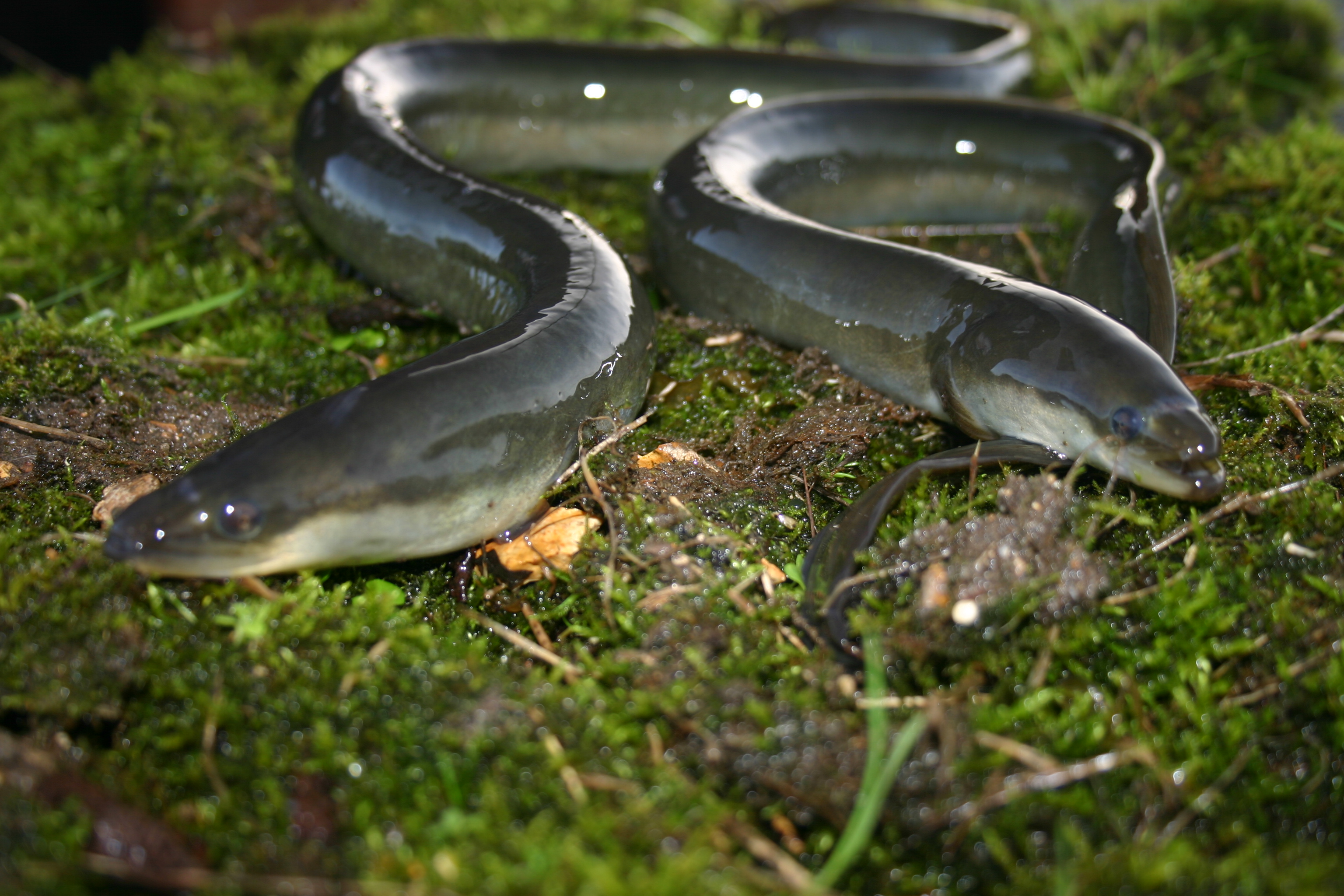
 

Now a review of British rivers will identify structures that can be pulled down, or sites that are suitable for eel-friendly bypasses. In some cases, a pipelined with grippy mesh is all that is needed for the eels to get past a man-made obstacle.


READ full article


From sea to source guidance

3303

From sea to source guidance free download http://www.fromseatosource.com/

This is an international guidance for the restoration of fish migration highways. You can download the guidance at www.fromseatosource.com
The guidance is the result of collaborations and partnerships with fisheries professionals all over the world, drawn together to provide a major new text on the theme of fish migration. The underlying concept is the increasingly recognised need for preservation, but more frequently, the restoration of free migration for all species of fish.
 

Learn more about ecohydraulics

4766

RESTORE attended an international symposium in Vienna in September.  The symposium gathered 300 participants to look at research and new solutions for our rivers. If you look at the proceedings you can see the discussions on large hydro power schemes around the world, like Mekong River.  The sturgeon can not migrate along the Danube and other fish struggle to move around our rivers.  At the event the work and cooperation in Austria between river managers and power companies is helping to solve some of these issues.  Discussion consisted of presentations about the benefits of river restoration, upstream and downstream fish migration, environmental flows, modeling and aquatic ecology.  New fish pass cases, combined with reproduction habitats, were presented in some presentations. Jukka Jormola from RESTORE gave a presentation on natural fish bypass channels and work that is being undertaken in Finland. Technical tours were organized to fish passes and a new side channel under construction on the Danube.

Proceedings: http://www.ise2012.boku.ac.at/

Want to know more about restoring eutrophic lakes - Algae Be Gone

5691

Algae Be Gone (ABG) is a project with partners from Sweden and Denmark. We work in two eutrophic lakes and their catchments, Lake Ringsjön in Sweden and Lake Sjælsø in Denmark. The overall aim of the project is to develop cost efficient methods for restoring eutrophic lakes in the region. These methods are needed in order to meet the ecological and chemical requirements according to the EU Water Framework Directive.

http://www.algaebegone.eu

Watch our new video on restoring an urban brook

4093

This video presents the most common means for restoring a brook for vulnerable brown trout.The filmed restoration workshop took place at Longinoja brook in Helsinki, Finland. The workshop was held and the video was made as part of the Life+ funded RESTORE partnership.

123456